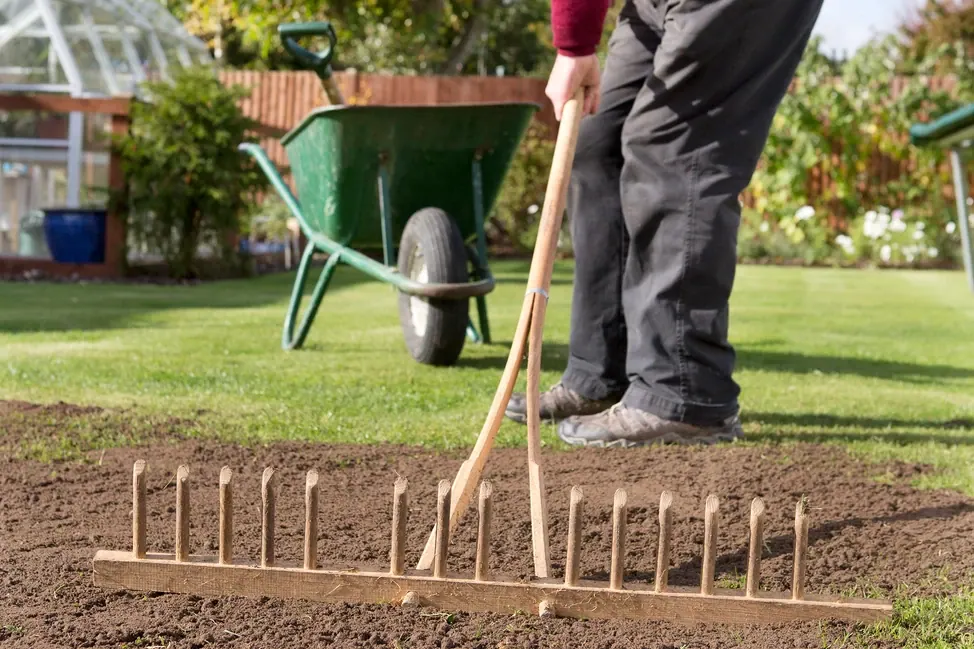
Top dressing is one of those lawn services that can sound larger than it is.
A thin layer of compost or soil is spread across the turf. The material settles around the grass plants, works into aeration holes, and adds organic matter near the surface. It can help smooth small imperfections and create better contact for seed without burying the existing lawn.
We offer top dressing as a specialty lawn service and evaluate the property before applying an even layer at an appropriate thickness. We also connect the service with aeration and overseeding when the lawn needs soil improvement and added grass density at the same time.
The important limitation is straightforward. Top dressing can improve the surface gradually. It cannot rebuild a deeply settled lawn, correct a major grade problem, or give trapped water a new outlet by itself.
Begin by measuring the uneven area
The word "low spot" can describe several very different conditions. One homeowner may have a shallow depression that becomes noticeable only when mowing. Another may have a section several inches below the surrounding lawn where water remains after every storm. A third may be looking at soil that settled over an old utility trench or construction area.
Before requesting top dressing, document the approximate length and width of the area, estimated depth, how long it has been present, water after rain, changes after irrigation, soft or unstable soil, recent utility or construction work, tree roots, drainage structures, nearby downspouts, and previous soil added to the area.
A straight board and ruler can help show the depth without requiring professional survey equipment. Photograph the area when dry and again after rain. That gives us more information than a close-up of uneven grass.
Minor surface variation is the best fit
Top dressing can be useful when the lawn remains established and the main goal is gradual surface improvement. Examples may include small mower-scalping areas, shallow footprints or depressions, minor frost or soil movement, light surface irregularity, thin turf needing overseeding, soil that would benefit from organic matter, aeration holes that can receive compost, and a lawn receiving planned renovation without full removal.
Our top-dressing material can improve soil quality, drainage, water retention, root conditions, and seed germination while helping smooth uneven areas. The existing grass should remain visible through the material. Applying a heavy layer in one pass can bury turf instead of improving it. Related seasonal care lives under our lawn care program.
A deep low area usually has a cause
A substantial depression deserves more investigation before soil is added. Possible causes include a settled utility trench, poorly compacted fill, buried construction material, decaying stump or roots, drainage erosion, a broken underground pipe, soil washing beneath the surface, animal activity, repeated vehicle traffic, or grade directing water into one location.
Adding soil without identifying the cause may make the surface look better temporarily while settlement continues underneath. Tell us about any history involving excavation, tree removal, sewer work, irrigation installation, or construction in the affected area. The lawn team may determine that top dressing fits the condition. It may also recommend a larger landscape or drainage evaluation before another surface layer is added.
Top dressing does not create a drainage outlet
Compost can improve soil structure near the surface. It cannot make water leave a closed low point. A lawn that holds water may need questions answered about overall grade, soil type, downspout discharge, neighboring runoff, irrigation overlap, compaction, drainage pipe, catch basin, landscape-bed elevation, hardscape runoff, and subsurface conditions.
We also provide irrigation management and work with sister company Eichenlaub on landscape design and construction. That broader relationship gives the property another path when the problem extends beyond routine lawn care. Our earlier article on how Keystone Green and Eichenlaub work together explains that handoff. The top-dressing proposal should state what surface improvement is expected and which water problems remain outside the scope.
Aeration and top dressing do different jobs
Core aeration removes plugs from the lawn to relieve compaction and improve movement of air and water into the soil. Top dressing adds material across the surface. We offer both services and describe aeration as a way to open compacted soil while top dressing adds compost or soil that can work into those openings.
Using them together may make sense when the lawn needs compaction relief, added organic matter, overseeding, better seed contact, surface smoothing, and root-zone improvement. The homeowner should still know which service is addressing which condition. Aeration does not fill a depression. Top dressing does not remove compacted soil plugs.
Overseeding changes the care after application
Top dressing can improve germination when paired with overseeding because the material creates better seed-to-soil contact. That combination also changes the homeowner's responsibilities after service. Ask for instructions involving watering frequency, mowing, foot traffic, pets, leaf cleanup, fertilizer, weed-control timing, first cut, areas receiving additional seed, and the expected establishment period.
A newly seeded lawn should not be managed exactly like established turf during the first part of germination and growth. Mark the treated areas so another contractor does not apply a conflicting product or mow too aggressively. Related nutrition notes sit under lawn fertilization and lime treatments.
Top dressing material should match the property goal
Our service page describes nutrient-rich compost or soil as top-dressing material. The exact blend and application should follow the lawn evaluation. Ask what material is being applied, why it fits this lawn, how thick the layer will be, whether aeration is included, whether seed is included, whether low areas receive extra attention, how existing turf will remain exposed, what post-service care is required, whether another application is expected later, and what problem will remain after the work.
A homeowner should not assume that any inexpensive screened soil is appropriate simply because it can be spread across grass.
Large grade changes belong in another scope
Top dressing is not the right tool for rebuilding several inches of elevation across a yard. A larger project may involve removing turf, importing and compacting soil, establishing new grade, correcting drainage, protecting the foundation, adjusting irrigation, resetting walks or edges, installing seed or sod, coordinating utilities, and repairing construction settlement.
That work should be designed as a landscape project rather than repeated thin lawn applications. The homeowner may still use top dressing later as part of ongoing soil care.
Give the lawn time to respond
Top dressing should not be judged the morning after installation. The material has to settle into the lawn. Rain or irrigation moves fine particles. Grass grows through the layer. Seed needs time to germinate when overseeding is included.
Take photographs from the same positions at installation, two weeks, first mowing, six weeks, end of growing season, and the following spring. Those images can help us assess how the lawn responded and where another small application or different repair may be appropriate.
We serve Fox Chapel, Cranberry, Wexford, Sewickley, Franklin Park, Allison Park, and surrounding Pittsburgh communities from 3809 Saxonburg Boulevard in Cheswick. Related reading stays in the blog. Call 412-822-9153 or use the contact page when you want to know whether a low spot needs top dressing or a larger plan.