
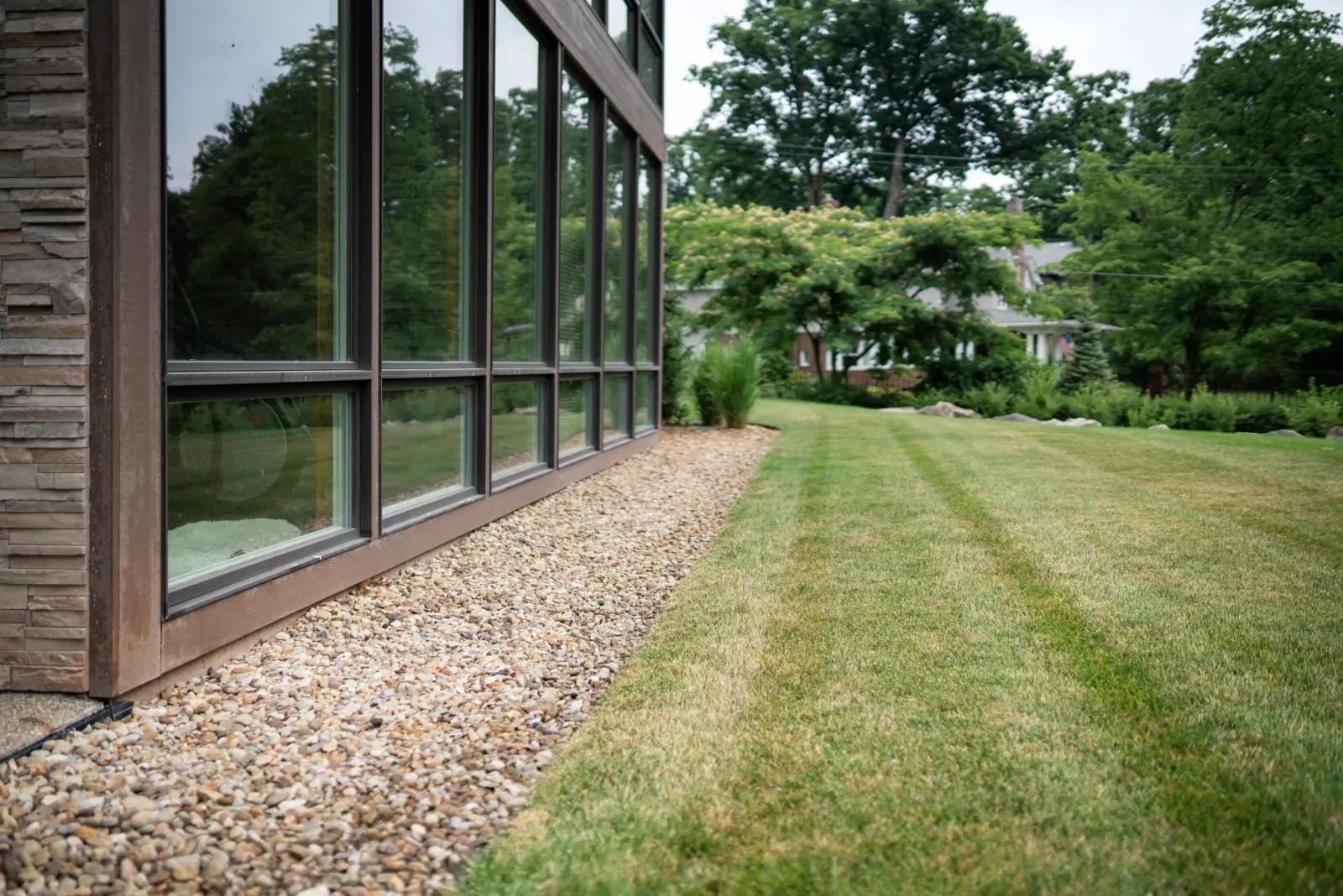


Every property has a line people follow without thinking: garage to garden, patio to play area, gate to the alley. On cool season turf around Pittsburgh, that line often looks fine in April and tired by June. The wider lawn may still be healthy while a narrow band along the same route stays pale. That pattern is usually clay compaction and crown damage, not a whole-yard failure.
Winter walks, sleds, and delivery routes all happened while growth was slow. Spring green up highlights the contrast. This article explains how to read compacted strips, what aeration and overseeding can do in our climate, and how it connects to programs we already run for Western Pennsylvania homes.
How to tell compaction from shade or drought
Shade thinning is usually wider and follows the tree line. Drought stress often hits slopes and sunny strips first. Compaction from repeated use is narrow, repeats in the same footprint year after year, and feels harder underfoot than turf six feet away.
Look for a pale ribbon where grass blades are short and crowns are crushed, sometimes with weeds that tolerate packed soil better than turf. If water pools on that ribbon after rain while the rest of the lawn drains, clay and winter traffic are working together, a pattern we describe in more detail in our piece on clay soil and compaction.
Why spring is when compaction becomes obvious
Cool season turf wakes up on either side of a beat down center while the packed band stays thin. Homeowners often try extra fertilizer on the ribbon alone, which rarely fixes soil structure that will not accept roots.
A structured lawn care program still matters because nutrition and weed control protect the recoverable turf around the strip. The packed band itself usually needs mechanical relief and a plan for use, not only another bag from the store.
Recovery tools that match our climate
Core aeration on the wider lawn can help the property overall, but the packed line may need targeted attention and realistic expectations about how much seed will hold if daily shortcuts return the same week. Fall remains the strongest window for overseeding success in our region, yet spring is still the right time to document the problem and stop making it worse with daily cuts across wet soil.
Top dressing and lime treatments enter the conversation when soil tests and site history support them. They are not magic on soil that still gets hammered daily. We prefer saying that plainly so you can choose between habit changes, hardscape, and professional repair in the right order.
Grubs, disease, and other look alikes
Skunk digging and lifted turf point toward grub control windows. Circular patches that grow with humidity may need lawn disease treatments after someone looks at moisture and mower habits. Compaction from repeated use stays linear. Bringing photos and a simple sketch of where people walk saves time on the first call.
If the thin line runs under trees, mention shade and root competition too. Plant health care programs and dormant pruning services can change light and moisture at the edge over seasons, which affects whether grass belongs in that exact line at all.
Hardscape, habits, and realistic goals
Sometimes the honest answer is a stepping stone run, mulch at the gate, or shifting the grill path for one season while turf recovers beside it. Landscape maintenance and landscape design services exist because long term circulation matters as much as chemistry for properties that host people every weekend.
Commercial entries and shared walks on HOA strips show the same physics at larger scale. If you manage grounds in Wexford or Sewickley, note delivery patterns when you talk with us so recommendations fit how the site actually operates.
Pairing with fertilization without overpromising
Our spring fertilization guide covers nutrition timing for the wider lawn. Compacted strips may green slightly with feed if roots are still alive, but feed cannot undo crushed crowns by itself. Think of fertilization as support for the recovery zone, not a substitute for aeration or use change.
When you are unsure which service line fits, the short quiz at which Keystone service fits your lawn can narrow the list before you call. Plant heavy properties may need the landscape quiz instead; both are linked from our blog index for easy browsing.
Overseeding expectations on compacted clay
Seed on packed soil that still gets daily use often fails quietly. Soil contact is poor, moisture swings are extreme, and birds find bare mineral fast. That does not mean overseeding is pointless; it means timing and relief from heavy use decide success. Fall remains the primary window for thickening cool season turf in Western Pennsylvania, yet spring documentation still helps you book aeration and plan a detour before Labor Day gatherings return.
Pair seed talk with honest weed pressure. Bare lines invite crabgrass and broadleaf settlers faster than surrounding turf. Weed control in a program assumes we know where bare soil repeats so preemergent and postemergent timing match the real map, not an idealized rectangle on the plat.
What to do this week
Mark your heaviest route in chalk or flags for one week and count how often it gets used. Decide one change you will try, wider arc, stones, or a temporary detour. Then request a quote or dial 412-822-9153 with that photo set. Browse all locations we serve if you are new to Keystone Green and want to confirm coverage before scheduling.