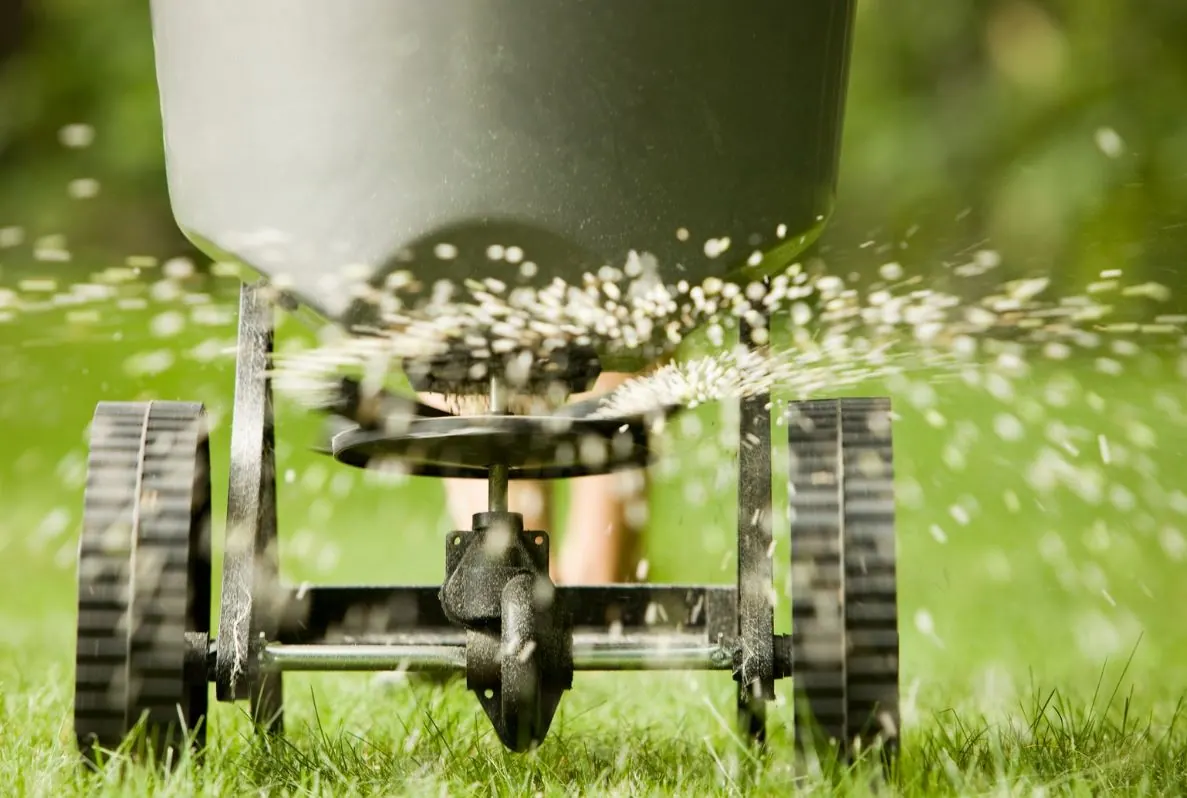
A lawn that stays pale after fertilization can make lime sound like an obvious next step.
Western Pennsylvania soils are often discussed as though every property is highly acidic and every struggling lawn needs the same bagged treatment. Two neighboring properties can have different soil histories because of construction fill, previous applications, topsoil, drainage, tree cover, and years of lawn care.
We begin our lime service with soil testing and use the measured pH to determine the application rather than applying the same amount automatically. That order matters because lime changes soil chemistry. It should address a documented condition, not function as a general green-up product.
Soil pH affects nutrient availability
Grass roots can sit in soil containing nutrients and still have difficulty using them when the pH is outside a suitable range. We describe lime as a way to reduce excessive soil acidity so the lawn can use nutrients more effectively.
The lime itself is not a complete lawn fertilizer. It does not replace nitrogen, seeding, aeration, water, mowing, weed control, disease treatment, insect management, drainage correction, or sunlight. Its job is narrower. The treatment modifies soil conditions based on the test result so the broader lawn program can operate in a more suitable environment.
Moss is not a soil test
Moss often appears in areas that are shaded, damp, compacted, thin, or poorly drained. Acidic soil can be part of the picture. The presence of moss alone does not identify the exact pH or prove that lime will correct every condition allowing moss to grow.
Before treating, document hours of sun, tree canopy, irrigation, drainage, soil compaction, mowing height, turf density, standing water, downspout discharge, and previous lime applications. A soil test can answer the pH question. The property inspection has to answer the shade, moisture, and turf questions.
Yellow grass can have several causes
A pale lawn may relate to nutrient deficiency, incorrect pH, heat or drought stress, saturated soil, disease, insect damage, compaction, poor roots, mowing stress, irrigation gaps, dormancy, or mixed grass species.
Our current blog already spends substantial time helping homeowners separate heat, irrigation, disease, shade, and soil conditions before choosing a treatment. The soil test should be one part of that diagnostic process. Applying lime because the lawn looks yellow can delay the work the lawn actually needs. Related disease notes live under lawn disease treatments, and weed pressure is covered under weed control.
Samples should represent the lawn
One soil sample from a flower bed may not describe the turf. A large property can also contain meaningful differences between areas. Tell us about imported soil, new construction, old garden areas, former wooded sections, septic areas, fill soil, low wet areas, sunny front lawn, shaded rear lawn, sections receiving different treatments, and previous lime application.
We can determine how samples should be collected for the service. The homeowner should not mix obviously different areas together without discussing it first.
More lime is not a faster correction
Soil amendments should be applied at a rate based on the test and the selected material. Adding more than recommended can move the pH beyond the desired range and create another nutrient-availability problem.
Our technicians use the soil evaluation to customize the application and monitor the lawn afterward. Ask what the measured pH was, what range is being targeted, what lime material is being used, what application rate is recommended, whether it will be divided into more than one visit, when the soil should be retested, how the treatment fits the fertilizer program, and which symptoms may have another cause.
The goal is not applying the largest possible amount. It is making a measured adjustment.
Lime works on a different timeline from weed control
A broadleaf weed treatment may produce visible plant changes relatively quickly. A lime application works through the soil and should not be judged by expecting the lawn to turn dark green immediately.
Ask when follow-up evaluation makes sense and which changes are reasonable to watch over time. Keep records of the test date, pH result, product, application rate, application date, fertilizer schedule, aeration, seeding, irrigation, photographs, and retest recommendation. That history helps prevent another company or future homeowner from applying lime without knowing what has already been done.
Fertilizer should not be increased blindly
A lawn responding poorly to fertilizer may have an unsuitable pH. It may also have compaction, root, water, or disease issues. Our fertilizer service typically uses a seasonal schedule with monitoring rather than one heavy application.
When lime is recommended, ask how it changes the fertilizer plan. We may keep the existing schedule, adjust timing, or recommend another action based on the lawn evaluation. The homeowner should not add another retail fertilizer simply because the color has not changed yet.
Aeration may address a separate soil problem
Acidic soil and compacted soil are not the same condition. Lime changes pH. Core aeration removes plugs to relieve compaction and improve the movement of water, air, and nutrients. We offer aeration and overseeding separately from lime treatment.
A lawn may need one service, both, or neither. The proposal should state what each service is intended to address. Surface soil improvement through top dressing is another separate decision when the lawn needs organic matter or seed contact rather than a pH change.
Construction soil deserves closer review
Newer homes can have lawns growing over disturbed or imported soil. The surface may contain several inches of topsoil over compacted subsoil, construction debris, or fill with a different pH from the surrounding area.
Tell us when the home is newly built, the lawn was recently installed, heavy equipment crossed the property, soil was imported, several areas perform differently, the lawn follows an old construction route, drainage changed after building work, or the same spots remain thin after seeding. A pH result can guide lime use. It will not by itself correct poor grading, rubble, compaction, or shallow topsoil.
Keep lime inside the larger lawn plan
The strongest lime recommendation should answer four questions. What did the soil test show? How much lime is recommended? What result is expected from changing the pH? What other lawn problems remain?
We serve the greater Pittsburgh region from 3809 Saxonburg Boulevard in Cheswick. Call 412-822-9153 or use the contact page when you want lime based on a soil test rather than a guess about Pittsburgh clay.