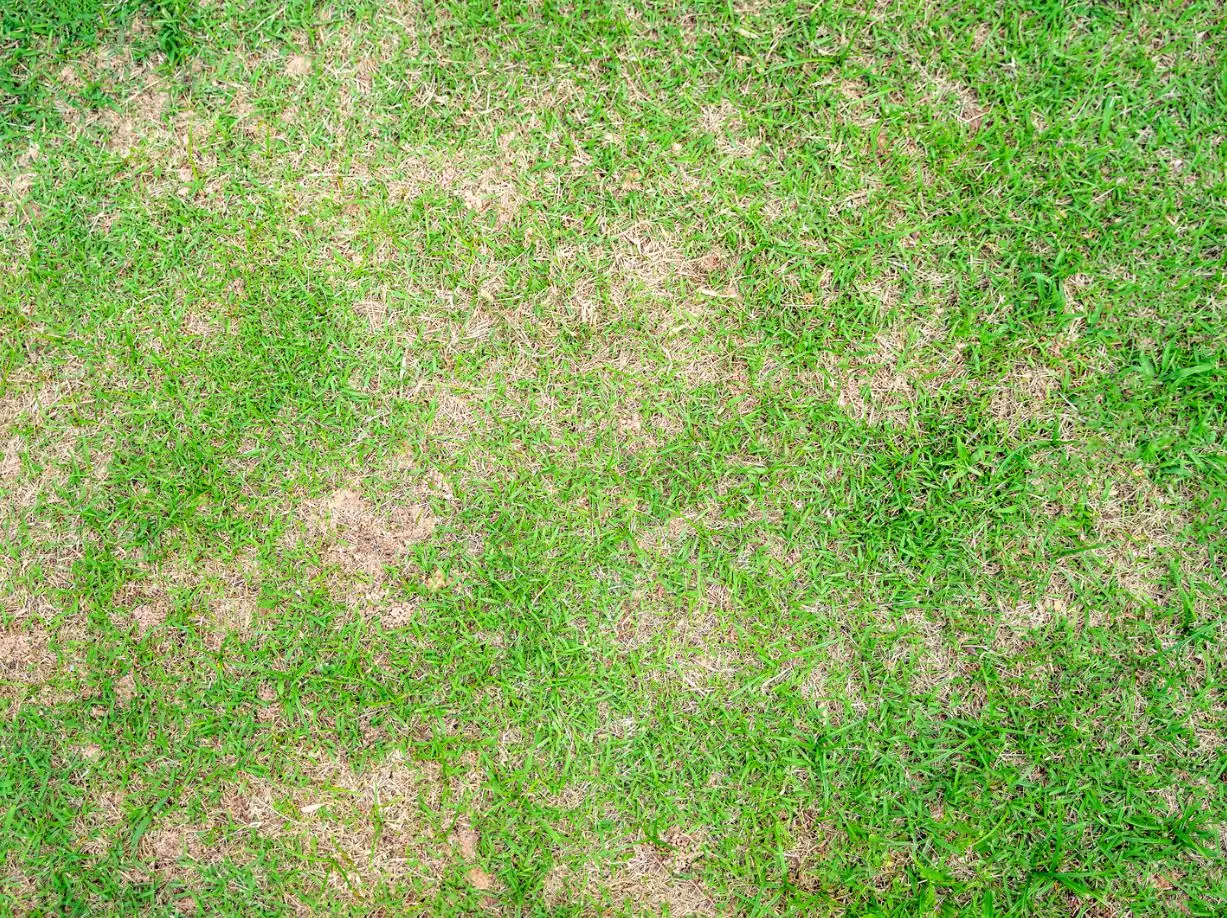
A yellow blotch on a Western PA lawn gets called fungus before anyone looks at the soil. Crews see it every week. Clay against a Pittsburgh foundation stays wet after a two-day rain, a mower scalp shows up as a tan ring, and a dog corner looks like a lesion from ten feet away. Color is a clue. It is not a diagnosis.
Keystone Green wants the pattern first. If the off-color area follows a sprinkler arc, a downspout splash, or the shade line of a maple, we start there. If the grass pulls like a wet towel and the crowns are slimy, disease stays on the list. Those are different next steps, and stacking a fungicide on a drainage problem wastes a visit.
Map the blotch before you name a pathogen
Walk the lawn in morning and late afternoon. Note whether the patch is darker when wet and pale when dry. Photograph a wide shot and a close shot of leaf blades. On clay, water sits in low bowls along walks in Butler and Cranberry lots. That standing film can invite disease later, but the first failure is often oxygen and roots, not a product gap.
Check mowing. A dull blade shreds tips and the lawn looks gray-brown the next day. Check last fertilizer date. A heavy feeding on a sealed clay surface can push soft growth that folds in humidity. Insects and grubs still need root evidence. Our grub notes belong in the file if the sod lifts.
Irrigation mistakes that mimic disease
Heads that throw onto a driveway and bounce back create a wet ring. Night cycles on clay leave leaf wetness until morning. Adding minutes to "green it up" often spreads the blotch. Irrigation management should confirm coverage in daylight before anyone talks chemistry.
If you already lengthened run times and the patch grew, write that down. That history changes the first visit. A dry strip on the same controller is a different zone problem, not proof the whole lawn has a pathogen.
What belongs on the work order
We separate cultural fixes from treatment. Raise the deck, move start times earlier, fix a head, or wait and recheck after a dry stretch. Fungicide is for confirmed tissue and weather that actually favor disease. The paperwork should say what success looks like: the patch stops spreading, or the wet ring is gone, not "the lawn looks greener."
Lime, weeds, and shade remain separate lines. A yellow lawn in Wexford shade is often a light and air story. See our notes on shaded crowns in humidity when the thin area sits under trees all afternoon.
Send evidence, not a product name
Include town, photos from two times of day, mowing height, last water change, and whether pets use the area. Call 412-822-9153 or request a quote. Cranberry and Pittsburgh city lots share clay, but a north-facing strip still behaves differently from an open back yard. We would rather confirm the cause than sell a tank mix because the grass looked yellow from the street.